
Whether you're jamming with friends or playing on stage, mastering the art of bass jamming can take your bass playing to new heights. In this bass lesson, we’ll dive into key tips and techniques to help you groove effortlessly and creatively in any jam session. Let’s break down the essentials, step-by-step!
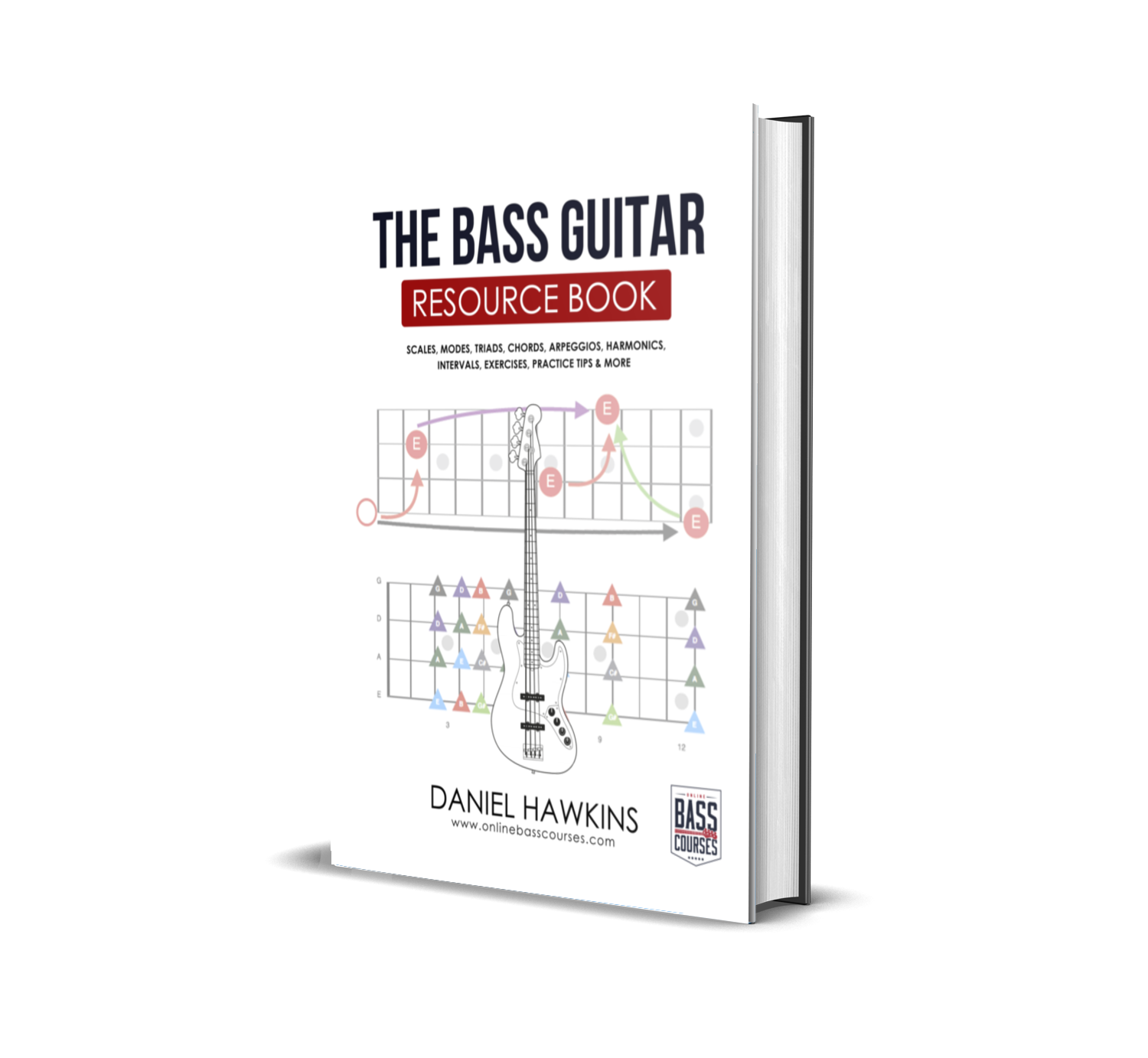
Scroll down for the free PDF with all the useful patterns and shapes as well as details of how to download the drum loops (and more!) for free.
1. Follow the Kick and Leave Space (01:07)
One of the first things to focus on when jamming is locking in with the drummer, specifically the kick drum. The relationship between the bass and kick is fundamental in creating a tight groove. But remember, it’s not just about playing every note – it’s about leaving space for the groove to breathe. Allowing for pauses will make your playing feel more dynamic and musical.
2. Listen to Drum Rhythms (03:00)
Beyond the kick, listen carefully to the drum rhythms as a whole. Pay attention to the snare, hi-hat, and any other percussive elements. These rhythms will guide your note placement and phrasing, helping you blend seamlessly into the overall groove. The better you understand the drummer’s feel, the tighter and more connected your jam will sound.
3. Riff-Based Ideas (04:05)
Riffs can be a great way to build a foundation for your jam. Start with a simple idea and develop it as the jam progresses. A strong riff gives the entire band something to lock onto and provides a cohesive element for improvisation. Don’t be afraid to experiment with variations of your riff, such as changing up the rhythm or adding ghost notes for extra texture. A riff is simple a repeating pattern so you can afford to make it simple as long as it grooves!
4. Use Arpeggios (05:21)
Arpeggios are an excellent tool for outlining the harmony in a jam. Arpeggios allow you to highlight the chord progression while still maintaining a melodic and rhythmic role in the band. You can use them to add sophistication and color to your lines. Don't forget to refer to the free PDF below for the shapes.
5. Simple Triads (07:19)
Sometimes, simplicity is key. Triads (three-note chords) are the backbone of many popular bass lines. By using major and minor triads, you can build a solid foundation for your groove. The simplicity of triads gives you the flexibility to focus on timing, dynamics, and feel, making them a go-to choice for many jam sessions.
6. Use Scales or Modes (09:53)
When the chord changes or you’re looking for melodic inspiration, scales and modes are your best friends. Whether it's the pentatonic scale, Dorian mode, or a blues scale, each will offer a different vibe to your jam. Knowing a few essential scales will help you navigate through different musical contexts and make your bass lines more expressive. I used the G Dorian mode in the lesson which is amazing for funk music.
7. Restrict Yourself to a Few Notes (13:12)
Sometimes, limitations can inspire creativity. Try restricting yourself to just a few notes or a small part of the fretboard. This can force you to think differently about rhythm, phrasing, and dynamics, ultimately making your bass playing more impactful. You’ll find that fewer notes can lead to more meaningful and focused playing.
8. Use Chord Progressions (13:43)
Understanding and applying chord progressions in a jam can elevate your bass lines. It’s important to know what chords are being played and how to move smoothly between them. By outlining the chords, you can add harmonic depth to the jam, providing a solid foundation for the other musicians while still leaving room for creativity. When just playing with a drum loop or drummer, you can play anything you like. With other musicians, you need to use your ears more to hear the chord changes.
9. Simple Groove + Key + Octaves (16:57)
If you ever feel stuck, rely on a simple groove in a key you’re comfortable with and throw in some octaves. Octaves are a great way to add movement and energy without overcomplicating your line. They also help maintain the groove’s momentum, giving you something reliable to return to while experimenting.
10. Try a New Technique (18:31)
Finally, don’t be afraid to try something new! Whether it's a different plucking style, slapping, popping, or using effects pedals, incorporating a fresh technique can inspire new ideas and add excitement to your jamming. Step out of your comfort zone and push your playing to new levels by experimenting with different techniques.
Essential Bass Guitar Shapes & Patterns
FREE Drum Loops!
I'm launching www.groove-loops.com with my longtime drum collaborator Jon Howells and musician/web-genius Gary Carruthers.
It's the place for bass and drum loops but it's also a creative community for musicians.
We're opening up a limited number of slots in the free tier. In return, you'll get five whole albums of drum loops as well as my bass loops that go with Jon's drums.
It's completely free to join and you'll get an amazing practice resource for free. Plus you'll be joining a knowledgeable group of diverse musicians.
Download your five drum albums here.
Didn’t see any “free” drum tracks. Lots of pitches to sign up and pay money. If I’m paying money, it’s not really free. Is it.
https://groove-loops.circle.so/c/albums
You’re looking in completely the wrong place then. It is really free and you get 5 drum albums as promised! There are sign up options for other tiers but, of course, don’t sign up to them. Take your free albums and unsubscribe. If you’re having issues with signing up and receiving the loops, email me – dan@onlinebasscourses.com – and I can help you out. Cheers. Dan.